
Notes from the Director, Winter 2026
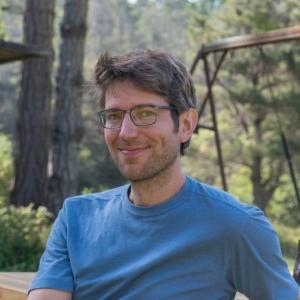
Will Ratcliff, QBioS Director
As we celebrate the 10th cohort of QBioS PhD students, Will Ratcliff reflects on how the program has grown from an ambitious idea to something durable and self-sustaining.
Dear QBioS Community,
This fall marked the tenth anniversary of QBioS welcoming its first cohort of PhD students, and we celebrated by bringing our community together. In November, alumni from across the country returned to Atlanta for a reunion organized and run by two of our current students, Chris Zhang and Hayley Hassler. Our founding director, Joshua Weitz, traveled from the University of Maryland to join us. Seeing former students reconnect with each other and with current students, watching Joshua catch up with the community he built, I was struck by how much QBioS has grown from an ambitious idea into something durable and self-sustaining.
That sense of durability feels especially important right now. The disruptions to federal research funding that I wrote about last spring have not resolved, and the uncertainty is shaping how universities across the country approach graduate admissions this year. Faculty are understandably cautious about taking on new students when they cannot be certain they will have the resources to support them through the duration of a PhD. Georgia Tech, like many institutions, is recruiting more conservatively this cycle. I want to be direct with you about this: it is better to under-recruit now and expand next year if federal budgets for research are upheld at current levels than to over-recruit and find ourselves unable to support the students we have committed to. This is a moment for prudence, not panic. I remain genuinely optimistic about the scientific enterprise in the United States and about our ability to continue doing the world's best research. The uncertainty is real, but so is the resilience of this community.
Against that backdrop, I am proud to celebrate what our students have accomplished over the past year. Seven of our doctoral candidates successfully defended their dissertations since April. Ethan Wold, working in Simon Sponberg's lab, defended in April after investigating how insect wingbeat frequencies emerge from the interplay of morphology, elasticity, and muscle physiology, work that reveals how stretch-activated muscle dynamics have enabled the remarkable diversification of wingbeat frequencies across evolutionary time. Raymond Copeland, advised by Peter Yunker, defended his thesis combining theoretical modeling, computational simulations, and experimental work to illuminate how spatial structure, ecological interactions, and evolutionary pressures shape microbial communities, with particular attention to the counterintuitive dynamics of enzyme-mediated antibiotic resistance. Marian Dominguez-Mirazo, who began with Joshua Weitz before Sam Brown became her administrative advisor, defended her thesis exploring how variability in phage life-history traits, particularly latent period, drives viral dynamics and fitness. Varun Sharma, also in Simon Sponberg's lab, defended in July after developing novel behavioral electrophysiology techniques to study multisensory integration and memory in hover-feeding hawkmoths, bringing the field closer to understanding closed-loop feedback control in small nervous systems. Leo Wood, working in Simon Sponberg's lab, defended in August after developing new information-theoretic methods to resolve millisecond-scale spike timing precision in hawkmoth motor programs. Leo was also recognized with the Institute-Wide Teaching Assistant of the Year award, a testament to his dedication to both research and teaching. Emma Bingham, co-advised by Peter Yunker and myself, defended her thesis on how metabolically-driven flows enable snowflake yeast to grow to sizes far beyond what nutrient diffusion limits would predict, work that illuminates how emergent physical phenomena can scaffold the evolution of complex multicellularity. Ben Seleb, co-advised by Saad Bhamla and myself, defended his thesis spanning biomechanics, nonlinear dynamics, and spatial ecology, from the mechanically coupled coordination of sled dog teams to the emergence of ordered landscape features from the movement patterns of grazing animals.
Our students continue to publish remarkable work. Sayantan Datta and QBioS alum Kai Tong were co-first authors on a Nature paper examining genome duplication in our long-term multicellularity evolution experiment, a major contribution to understanding genome-scale evolutionary dynamics. Alfie Brownless received the Promise in COMP Award from the Division of Computational Chemistry of the American Chemical Society, recognizing her work on enzyme dynamics and her efforts to advance the impact of women in computational chemistry. She will present at the Women Make COMP symposium at the Spring 2026 ACS National Meeting. Ryan Lowhorn was awarded both the NSF Graduate Research Fellowship and an NIH T32 InQuBATE Training Fellowship. Casey King received the Georgia Tech Biochemistry and Biophysics GAANN Award. And among our incoming Fall 2025 cohort, Yufei Xiao arrived with a President's Fellowship.
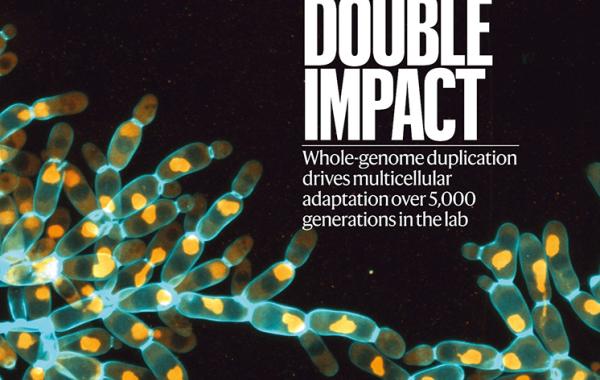
The JS Weitz Excellency in Travel Fund supported eleven students this year in presenting their research at conferences spanning four continents. Jin Zhu presented at the APS Division of Fluid Dynamics meeting in Houston. Sana Amminaji presented at the Society for Neuroscience conference in San Diego. Ellen Liu traveled to Hangzhou, China for IROS 2025, the IEEE/RSJ International Conference on Intelligent Robots and Systems. Sidharth Srinivasan will present at the Student Conference on Conservation Science in Cambridge, UK this spring. Zhaochen Xu and Jianfeng Lin will present at the Society for Integrative and Comparative Biology meeting in Portland. Brendan Shrader received funding for the Joint Mathematics Meetings in Washington, DC. Cassie Shafer and Zach Mobille also received awards for upcoming conferences. And Sayantan Datta traveled to the University of Geneva for a month-long research visit to establish new microscopy protocols for visualizing cellular ultrastructure in our evolved snowflake yeast. The range of these conferences, from fluid dynamics to neuroscience to conservation biology, reflects the interdisciplinary spirit that defines QBioS.
I would be remiss not to mention that Georgia Tech was ranked seventh in the world in the 2026 Times Higher Education Interdisciplinary Science Rankings. QBioS exists because Georgia Tech decided, over a decade ago, that training scientists to work across traditional boundaries was worth investing in. It's gratifying to see that bet recognized.
Ten years in, QBioS is no longer an idea or an experiment. It is a community with its own traditions, its own alumni network, its own way of training scientists who move fluidly between disciplines. I've come to believe that this fluidity is itself a kind of resilience: scientists who can work across boundaries are better equipped to adapt when circumstances shift. Whatever challenges the coming years bring, I am confident we will meet them together.
Will Ratcliff, Director, QBioS PhD Program