News
A Georgia Tech study challenges a decades-old explanation for one of neuroscience's most famous signals, revealing an intrinsic neural code for tracking time.

The Georgia Tech researcher and longtime neuroscience community leader will help catalyze new collaborations and research opportunities across the Institute for Neuroscience, Neurotechnology, and Society (INNS).

The 2026 cohort includes 28 early-career scientists based in the United States who are changing the world with their work.
Four out of the six eligible QBioS students were selected for 2026 Graduate Research Fellowship Program awards from the National Science Foundation.
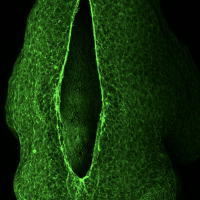
Georgia Tech researchers demonstrated the mechanics behind neural tube closure, which can lead to severe or fatal birth defects if unsuccessful.


SYNTHETIC EYES ON NATURAL LIVES: MACHINE LEARNING APPROACHES TO BEHAVIORAL ANALYSIS IN ECOLOGICALLY VALID CICHLID ENVIRONMENTS

Bacterial systems across scales: quantitative frameworks for within-host, ecological, and evolutionary dynamics
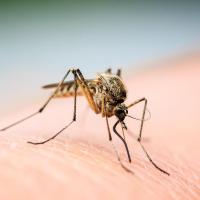
Researchers have visualized mosquito flight behavior for the first time — which could improve mosquito-control strategies.

The fellowship is one of the most competitive and prestigious awards available to early-career scholars, and will support Freeman as he studies birds worldwide from Appalachia to Ecuador, investigating how mountain species respond to a…

When Postdoctoral Research Fellow Hannah Youngblood’s work on exfoliation glaucoma (XFG) was featured by the BrightFocus Foundation, it caught the attention of Jennifer Rucker, …
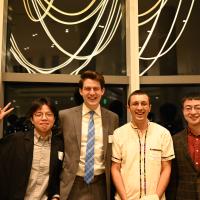
This year, the QBioS Graduate Program welcomed our 10th cohort of PhD students.

With more than 60 presentations and recognition for neuroscience outreach and AI research, Georgia Tech demonstrated its growing impact at the 2025 Society for Neuroscience’s annual meeting.
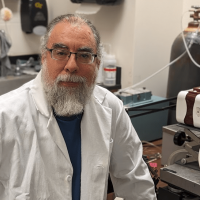
Physics Professor Flavio Fenton has been named a Bill Kent Family Foundation AI in Higher Education Faculty Fellow. The fellowship supports faculty projects that explore innovative, ethical, and impactful uses of AI in teaching and learning.…
The AI4Science Center's seed grant aims to support the development of research projects centered on innovation and collaboration.
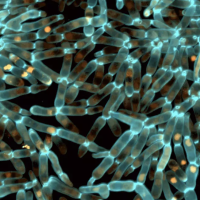
The grant will enable research into the origin of complex life.