
Welcome to QBioS. The Interdisciplinary Graduate Program in Quantitative Biosciences (QBioS) at Georgia Tech was established in 2015, with our inaugural class of Ph.D. students joining us in Fall 2016. In fall 2026, we welcome our eleventh cohort, with 39 active Ph.D. students and 40 alumni. QBioS has 60 participating program faculty representing six participating Schools within the College of Sciences. We welcome applications from students interested in innovative research on living systems building upon a foundation of rigorous and flexible training. The QBioS program will prepare a new generation of researchers for quantitative challenges, new discoveries, and fulfilling careers at the interface of the physical, mathematical, computational and biological sciences. Apply by December 1, annually to join the class of students entering the QBioS Ph.D. program in August.
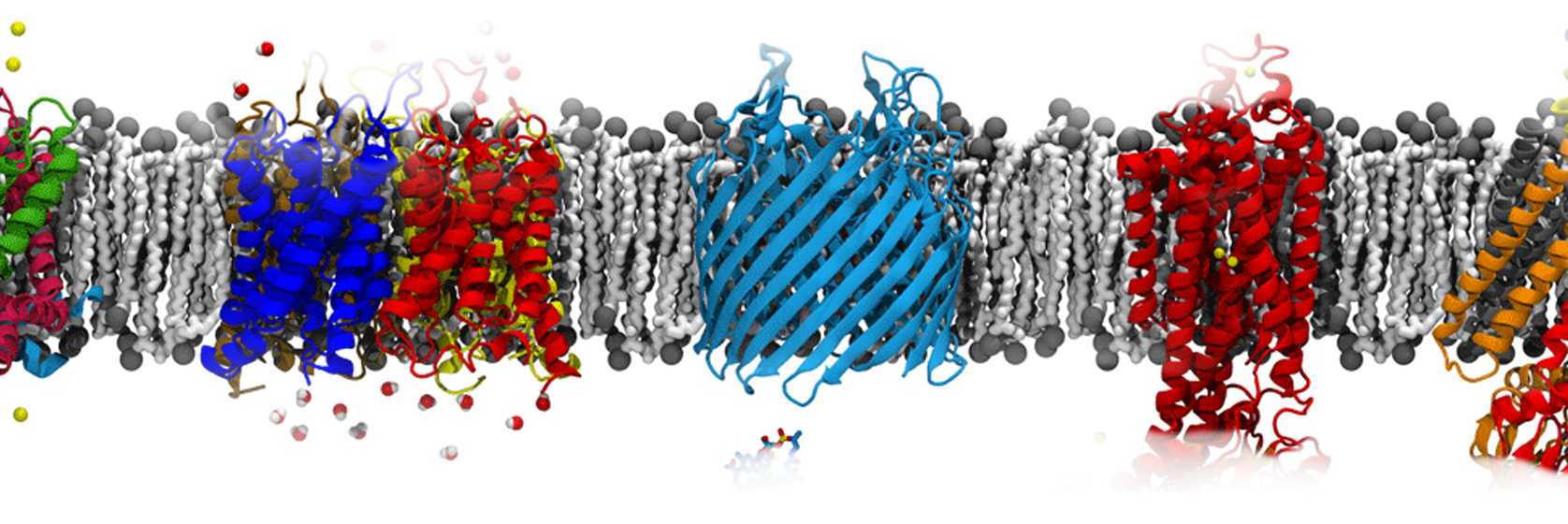
Welcome
News and Events

A Georgia Tech study challenges a decades-old explanation for one of neuroscience's most famous signals, revealing an intrinsic neural code for tracking time.


The Georgia Tech researcher and longtime neuroscience community leader will help catalyze new collaborations and research opportunities across the Institute for Neuroscience, Neurotechnology, and Society (INNS).

The 2026 cohort includes 28 early-career scientists based in the United States who are changing the world with their work.

Four out of the six eligible QBioS students were selected for 2026 Graduate Research Fellowship Program awards from the National Science Foundation.
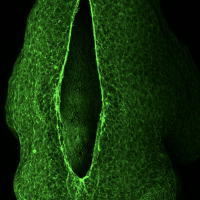
Georgia Tech researchers demonstrated the mechanics behind neural tube closure, which can lead to severe or fatal birth defects if unsuccessful.


SYNTHETIC EYES ON NATURAL LIVES: MACHINE LEARNING APPROACHES TO BEHAVIORAL ANALYSIS IN ECOLOGICALLY VALID CICHLID ENVIRONMENTS